
Transforming Education

Education is an essential pillar for growth, prosperity and productivity. Yet, it is a long-term investment that often fails to reach the top of the priority list for lower middle-income countries, resulting in a global jobs and skills crisis.

IFFEd partners with sovereign donors, philanthropic partners, national governments, and multilateral actors to strengthen sustainable financing pathways and education outcomes.
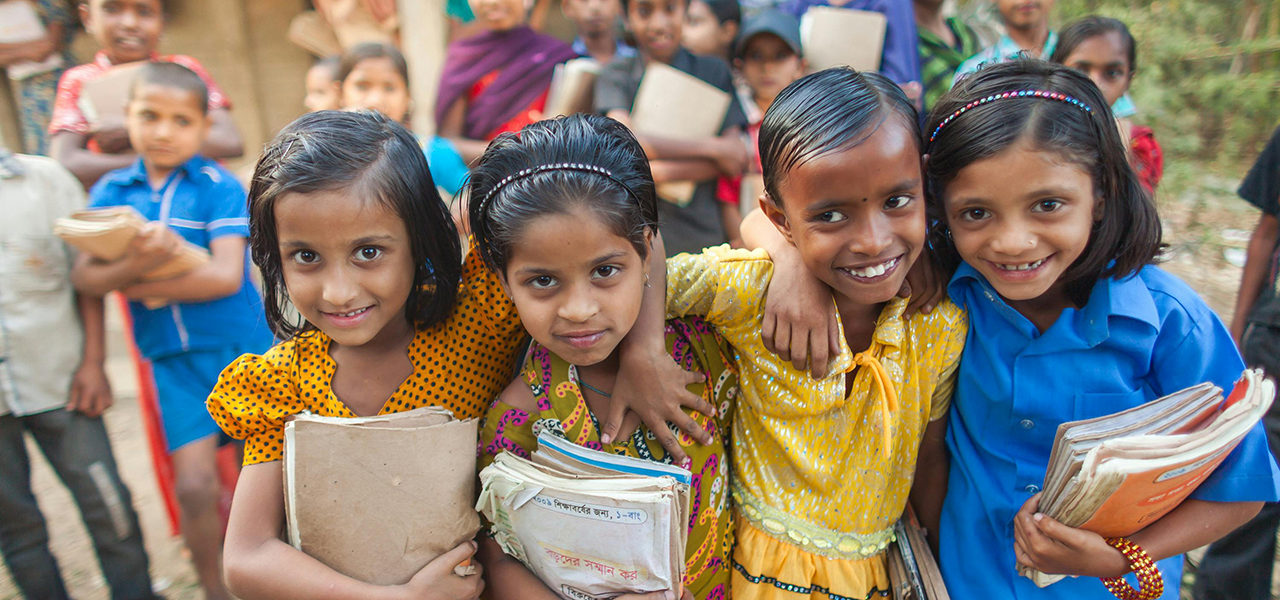

a group of smiling students

The scale of the challenge

Lower-middle-income countries have over 1 billion young people. Nearly half of the world’s children and youth – over 1.2 billion – live in lower-middle-income countries. These countries include some of the world’s most populous, like India, Indonesia, Kenya, Nigeria, and Pakistan.

  • A more unstable global context: Education is now operating in a more volatile world. Geopolitical tension, conflict, climate shocks and economic uncertainty are increasing fragility across regions.
  • A growing global crisis: Even before COVID-19, over half of the world’s children and youth were either out of school or in school but not learning the skills needed to thrive. COVID-19 tragically deepened and intensified this crisis. Education systems are under intense pressure and there is an increasing learning poverty crisis in lower-middle-income countries, 70% cannot read a sentence, up from 57% pre-pandemic; skills gaps are widening and demographic growth is exponentially increasing. Unless we act now, learning losses will translate into significant long-term challenges with grave economic, development, and social ramifications.
  • Global funding gap: Total international aid for education is currently only around $16.6 billion, falling far short of the staggering financing gap in lower middle-income countries of $71 billion per year. Targeted action is needed urgently to help these countries unlock investments in education and skilling, train the future’s entrepreneurs, engineers, doctors, artists, and activists, and build a better, more resilient world.
  • Investment dramatically reduced: Improving education requires long-term predictable investment. Yet, official development assistance (ODA) budgets have been drastically reduced. Overall, ODA fell 23.1% in 2025 – that is the largest single-year contraction on record and the second consecutive year of decline. In addition, domestic budgets face competing priorities such as health, security and climate.
  • The missing middle: While wealthier countries are able to provide quality education using their own resources and the world’s poorest countries receive the highest proportion of bilateral grant aid and financing from existing global funds for education, lower-middle-income countries fall into a “missing middle.” They are too poor to mobilize resources domestically and have become “too rich” to access the low-cost financing necessary for education.
  • Limits of existing financing tools: The traditional official development assistance (ODA) model is no longer viable; the gap between the required investment and the available financing is widening. Without additional concessional support, borrowing costs can limit investment even where returns are high. Grant-based instruments alone cannot meet the scale of demand.
  • Increased centrality of Multilateral development banks (MDBs): With bilateral aid falling and private lenders stepping back from financing, it is crucial that the multilateral development banks can step up and fulfil their central roles in the international financing architecture. Multilateral development banks have the capacity and capability to support and deliver education and skills investment at scale but still education must compete with other sectors for affordable finance.In light of the scale of the increasing scale of the challenge, it’s vital that every dollar available for education can be leveraged to deliver the greatest possible impact. It is precisely why IFFEd’s dual multiplier model is so critical.

In light of the scale of the increasing scale of the challenge, it’s vital that every dollar available for education can be leveraged to deliver the greatest possible impact. It is precisely why IFFEd’s dual multiplier model is so critical.