
Ukraine’s former First Deputy Minister of Education and Science, Dr. Yevhen Kudriavets, has joined IFFEd as its Director of Strategic Partnerships and Affairs.
After Ukraine was invaded, Yevhen led the development of international partnerships and co-ordinated donors to aid education recovery efforts during a war. He will bring that experience to IFFEd as it continues to advocate for innovative financing that delivers evidenced based education reforms, showcasing greater impact for donor countries in a period of limited resources.
As Yehven outlines below, “it is important to recognize that conflict is one form of disruption but there are many others. Demographic growth, artificial intelligence, migration, climate change, automation and rapidly changing labour markets are already forcing governments everywhere to reconsider what their education and skills systems are designed to achieve. For many countries, the choice is not whether their education system will change. It is whether they will have the financing and institutional capacity to shape that change.”
The new equation for education: strong partnerships, innovative financing, more leverage, better outcomes.
There has rarely been a more difficult moment to make the case for international investment in education. Official development assistance fell by more than 23% in 2025, the largest annual decline on record, and the OECD expects another contraction in 2026. Education is being hit particularly hard. UNESCO projects that support for education could fall by around 30% between 2023 and 2027. At the same time, the financing gap for achieving global education goals remains close to $100 billion every year. The challenge in front of us is no longer simply how to persuade governments to allocate more money to education. It is how to create more impact from every dollar that is still available.
Governments providing development finance are under pressure from taxpayers and parliaments while facing competing domestic and geopolitical priorities. They are necessarily asking harder questions about results. What did our investment change? Did it create something sustainable? Did it mobilize additional resources? Has it strengthened and enhanced the economic productivity of beneficiary countries? At the same time, finance and education ministers in lower-middle-income countries face their own difficult choices. They know that investing in people is fundamental to growth, but education competes every year with infrastructure, health, energy, climate adaptation, and security. This is the environment in which I am joining the International Finance Facility for Education (IFFEd) to mobilise smarter financial support for global education, and it is precisely why I believe IFFEd’s moment has arrived.
I have often argued, alongside others, that education should not be treated simply as a social expenditure. It is an investment in a country’s productive capacity. The question should not only be, how much are we spending on education and can we increase it? It should be, what economic and human-capital returns are we creating from that investment and how can we increase it? Better education means stronger skills which raises employability and income levels. It increases a country’s capacity to innovate, attract investment and compete internationally.
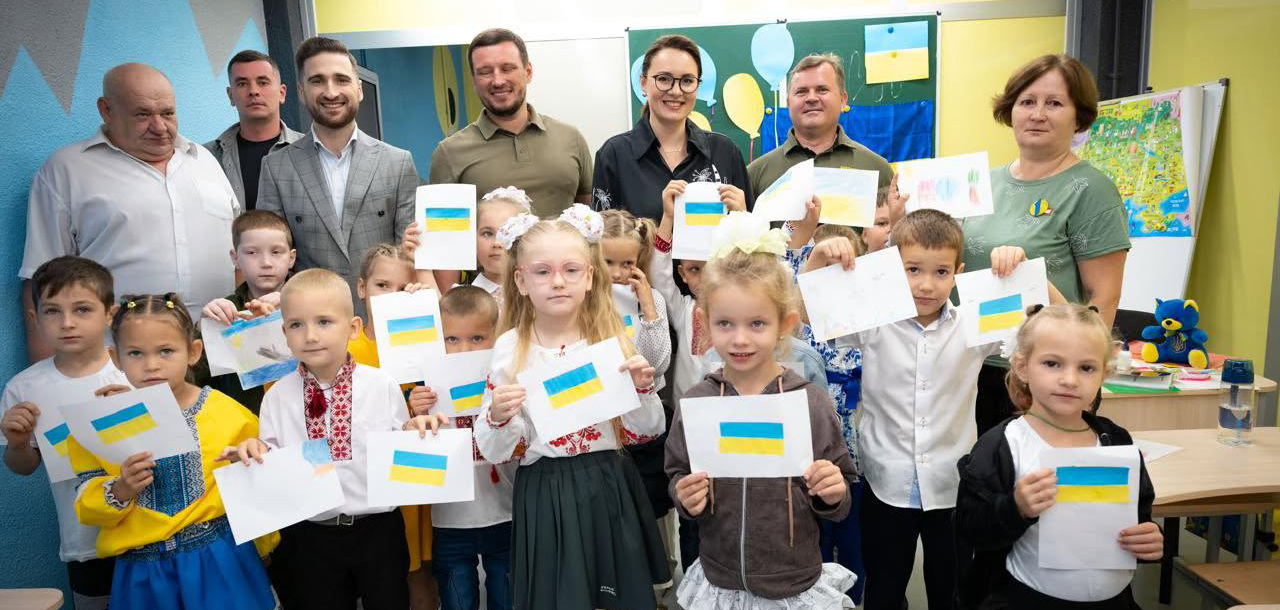
I spent the last few years confronting these questions from inside a government. As Ukraine’s First Deputy Minister of Education and Science, during a full-scale war, my responsibility was not simply to advocate internationally for more resources. Our team had to build the investment case, convince donors, align the Ministry of Finance and other government stakeholders, structure programmes with multilateral development banks and development partners, and then create the institutions capable of implementing them. Over that period, we mobilized more than $1.4 billion in external education financing and built a wide-ranging portfolio of programmes and partnerships.
But raising the financing was only one part of the work. The more difficult task was answering the questions that came after the financing was committed. How will this investment meaningfully accelerate reforms and how will we measure that acceleration? How will investment change learning outcomes? How does education and skills connect to employment and is there a clear pathway? How do we make sure any financing strengthens and becomes part of our national system instead of creating another parallel project? Having to answer those questions fundamentally changed the way I think about resource mobilisation and its impact.
Financing without an implementation strategy is not enough. And an excellent reform strategy without financing will simply remain an aspirational plan.
Ukraine was an extreme environment in which to learn this lesson. War had destroyed schools, displaced students and teachers, interrupted learning and dramatically constrained public finances. The intuitive response could have been simply to seek international support to rebuild what had been lost. But disruption also enabled us to ask a different question: If we must rebuild, why rebuild yesterday’s education system? We had to restore our education system, but we also had the ability to reform it at the same time.
We invested in underground school shelters while redesigning the school network. We restored access while accelerating curriculum reform. We mobilised devices for students cut off from classrooms while building better digital infrastructure. We financed immediate needs while creating multi-year public investment pipelines. We expanded vocational education while connecting it more closely with employers and the skills required for reconstruction. We used World Bank financing not merely to fill a budget gap but to support system reforms through results-based instruments. This required bringing together education policy, public finance, international partnerships and implementation. It also required convincing domestic decision-makers that even during war, education remained an investment the country could not postpone.
Ukraine is an extreme example, although there are many countries struggling with conflict who are making these choices and that do not benefit from the public spotlight and the international support it can generate. It is also important to recognize that conflict is one form of disruption but there are many others. Demographic growth, artificial intelligence, migration, climate change, automation and rapidly changing labour markets are already forcing governments everywhere to reconsider what their education and skills systems are designed to achieve.
For many countries, the choice is not whether their education system will change. It is whether they will have the financing and institutional capacity to shape that change.
This is where I see the power of IFFEd. IFFEd was built around a simple financial premise, use scarce donor resources as an investment and truly multiple them, rather than match funding them, through the international finance system; and at the same time ensure that the financing is only used for evidenced based reform that generates measurable outcomes. IFFEd does not replace the need for domestic financing commitments. It does not substitute grants to the poorest countries or humanitarian financing in emergencies. And it does not create another parallel implementation architecture. Instead, it works through multilateral development banks and national systems to make long-term investment in human capital more financially possible.
For sovereign contributors, IFFEd enables development budgets to work harder. This matters enormously when fiscal space is limited. For partner countries, IFFEd addresses a different problem, it helps lower the cost of borrowing, making it easier for Governments to justify the cost when assessing against projects that may have more immediate returns.
In my new role at IFFEd, I want to help make the case for both sides of the IFFEd partnership. With sovereign donors, I want to make the conversation about leverage, additionality and measurable return on scarce development resources. If governments have fewer resources available for international cooperation, our response cannot simply be to repeat the same request more loudly. We have to offer better instruments. We need to show how guarantees can mobilise capital that conventional grants cannot. How every taxpayer-funded dollar can generate substantially more investment. And how that financing ultimately contributes to growth, stability, jobs and more prosperous partners.
With education and finance ministers, the conversation is different but connected. We need to demonstrate that education programmes can be built as credible national investments: grounded in evidence, integrated with public financial planning, connected to labour-market needs and supported by implementation capacity.
Countries should not borrow simply to spend more on education. They should invest to transform what their education and skills systems can deliver for their economies.
That requires clear priorities, credible investment pipelines, measurable outcomes, and institutions capable of execution.
Having spent time on the government side of these negotiations, I know how difficult that alignment can be. Education ministers need to make their case to finance ministers. Finance ministers need confidence in returns and debt sustainability. Multilateral development banks (MDBs) require viable programmes and results frameworks. Development partners need additionality and accountability. IFFEd’s role is to help those interests converge.
The international development community has entered a period in which resources may remain constrained for years. We can respond to that reality by accepting lower ambition. Or we can redesign the way development capital works. I believe education has an opportunity to lead that transition. The case for investing in human capital has never been stronger. But making that case today requires more than demonstrating need, it requires demonstrating value. For governments considering joining IFFEd, the proposition is therefore bigger than another contribution to another development institution. It is an opportunity to multiply the development power of sovereign capital. And for lower-middle-countries considering using the platform, it is bigger than access to another source of financing. It is an opportunity to unlock affordable borrowing and convert long-term ambitions for human capital into evidence based implementable reforms.
My ambition in joining IFFEd is to bring what I learned from operating across the full cycle of education decisions in Ukraine, from making the political case for human-capital investment, to mobilizing financing and from designing programmes to delivering reforms, to applying it at scale. Ultimately, IFFEd’s objective is not simply to finance more projects. It is to enable countries to build education and skills systems that are rooted in evidence and impact, enabling them to become engines of their own future prosperity.
Dr. Yevhen Kudriavets is the Director of Strategic Partnerships and Affairs at IFFEd. Previously he served as Ukraine’s First Deputy Minister of Education and Science.
7th September 2026