
- The long-term partnership between the World Bank and International Finance Facility for Education (IFFEd) will unlock $750 million for eligible lower middle income countries within the World Bank education portfolio.
- Uzbekistan’s Transforming education for economic growth (BILM) is the first co-financed programme within the partnership to be announced.
- IFFEd supports The World Bank’s jobs and skills agenda, delivering impact across the full education lifecycle and providing a new component to the education financing toolkit.
The World Bank and the International Finance Facility for Education (IFFEd) have announced a new flagship partnership that will unlock $750 million of concessional education funding for lower middle income countries. It provides a direct response to the three-fold global crises of poor education and skills outcomes alongside a backdrop of diminishing investment and competing national priorities.
As traditional aid budgets rapidly diminish, the new partnership will provide lower middle income countries with additional access to concessional funding through an approach that blends IFFEd’s innovative guarantees with grants, boosting the amount of capital the World Bank can lend for education programming while lowering borrowing costs for countries.
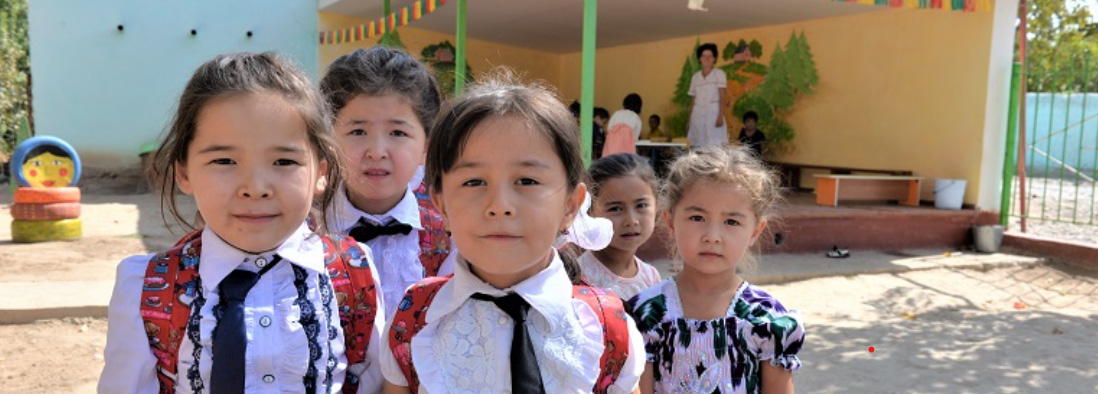
Alongside announcing the partnership, The World Bank and IFFEd have announced the first co-financed programme in Uzbekistan, where 80% of students do not achieve foundational literacy and numeracy.
IFFEd is providing a $16,7 million guarantee on the World bank loan and a $5 million grant to the $378 million Transforming education for economic growth (BILM) programme which will be implemented by the Government of Uzbekistan across six regions with high poverty rates. Approximately 45 percent of all schools in the country are in the six regions and face some of the most severe learning challenges and school infrastructure deficits.
BILM will improve teaching quality and learning environments for foundational skills acquisition in the targeted regions and primary schools’ grade 1 – 4. It will be the first system level education reform of its kind in the country integrating and anchoring evidence to use at school and regional levels and centring inclusion through integrating gender and disability outcomes into the project design. Notably, BILM also includes the first use of Program-for-Results modality in Uzbekistan, with disbursements linked to verified outcomes rather than inputs.
The programme in Uzbekistan showcases IFFEd’s unique design as a dual financing and impact multiplier: using donor guarantees and grants to unlock significantly larger volumes of concessional finance for education and skills while ensuring that the additional financing supports evidence-based reforms that are designed, implemented and continuously improved to deliver sustainable results.
World Bank Division Director for Central Asia, Najy Benhassine, said: “Strengthening foundational skills in primary school, including reading, mathematics, and socio-emotional skills, is central to further building Uzbekistan’s human capital base and advancing its development. These skills will help children develop more advanced competencies and prepare them for the rapidly evolving jobs market. They are also critical to the country’s economic growth, which depends on a workforce capable of driving innovation. The new World Bank IDA-funded BILIM Program aims to help the authorities invest in these foundations.”
IFFEd CEO, Karthik Krishnan, said: “The partnership with the World Bank expands IFFEd’s ability to drive programmes in Africa and support Governments – on what soon expected to be the youngest continent – to deliver impact. By investing strategically in projects from Early Childhood Education (ECE) to Technical and Vocational Education and Training (TVET), we hope to support the development of the future Vietnams’ and Indias’ of Africa.
“Our first co-financed programme with the World Bank in Uzbekistan demonstrates, in practice, how IFFEd not only unlocks additional financing but also drives scalable education interventions with learning and evidence at their core.
“Investing in education and skills in lower middle income countries – home to nearly half of the world’s children and youth – is key to powering long-term economic growth and making progress on global health, climate, and equity goals. As resources reduce and the education funding gap increases, we need to do things differently and our financing model delivers seven times more impact than traditional grants; and in a time of reduced funding this is vital.
The World Bank’s skills and jobs focus is a cornerstone of its development agenda. The IFFEd and World Bank partnership comes at a time when more than 50% of students in lower middle income countries cannot read simple text by age 10 and those that do graduate, do not have the necessary skills to find jobs and support the economic development of their nations.
The World Bank joins the Asian Development Bank (ADB) as IFFEd’s second multilateral development bank partner. The ADB previously announced a partnership with IFFEd worth half a billion dollars to support lower middle income countries committed to improving education and skills. The first co-financed ADB IFFED programme has been announced in Karnataka, India; with more to follow later in 2026.
Conversations continue with additional multilateral development banks and sovereign donors interested in joining IFFEd to tackle the annual $97 billion education funding gap. These conversations include Philanthropy who are being encouraged to explore IFFEd’s philanthropy guarantee model and leverage their balance sheets for social impact alongside generating financial returns.
8 July 2026